Jeju Folk Five-Day MarketIt Only Opens on the 2nd and 7th
Find a spot in the food section, spread out a pajeon and a bowl of makgeolli, and you find out what you actually came here for.
Head for the food section
There is an area inside the market where stalls from around the market sell cooked food in one place. You grab things from different vendors, find a seat outdoors, and spread it all out.
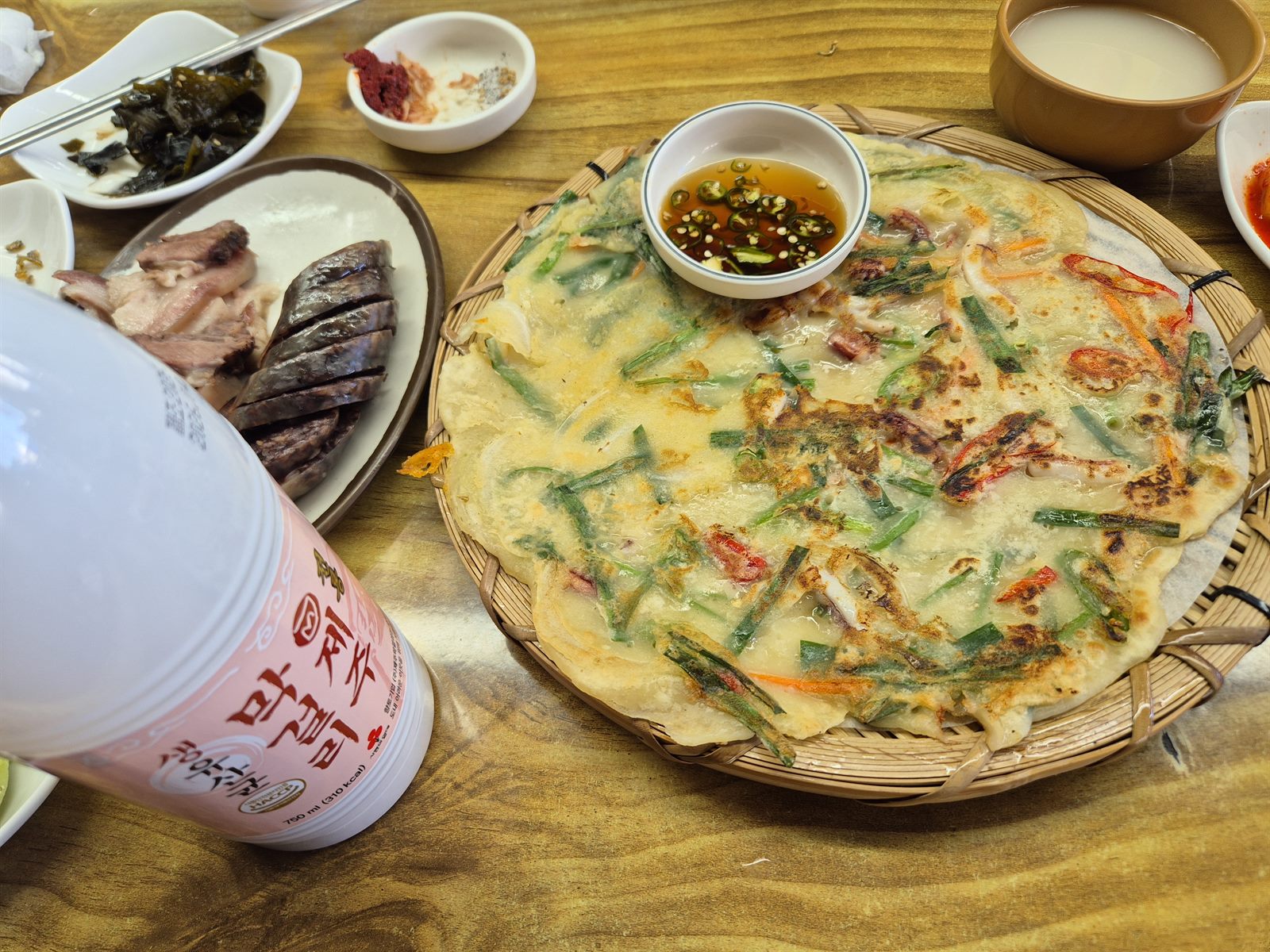
I had pajeon and chapssal sundae.
- Pajeon (savoury spring onion pancake) — crisp at the edges, excellent. Eating it straight off the griddle makes a real difference.
- Chapssal sundae (glutinous rice blood sausage) — honestly, not to my taste. The texture read as closer to a Chinese-style sausage than the sundae I'm used to. If you have strong opinions about sundae, try a small portion first.
And Jeju makgeolli — the local unfiltered rice wine, on the sweet side here, which works well against a fried pancake. A cup in the middle of the afternoon at a market is a very good way to spend a Jeju day.
What it looks like
A large pancake lies spread on a bamboo basket. Green onion, red chili, shredded carrot and what look like pieces of seafood are set into the golden-fried batter, with a small dish of soy sauce with sliced chili in the middle. On the left, a plate holds boiled pork and something like dark sundae, and in front you can see a white makgeolli bottle and a cup of cloudy makgeolli. A seaweed side and a small dish of seasoning sauce sit on one side.
Menu words
- Buchimgae is a Korean pan-fried pancake made by mixing ingredients into batter and frying in oil
- Makgeolli is a cloudy rice liquor, often paired with buchimgae
Check the market day first
Start with the part that catches people out. A Korean oiljang — literally "five-day market" — is not a market that runs for five days, and it is not open every fifth day of the month either.
This one opens only on dates ending in 2 or 7.
| Open on |
|---|
| 2nd · 7th · 12th · 17th · 22nd · 27th |
Six days a month. Show up on any other date and you are looking at a very large empty car park.
If a traditional market is on your Jeju list, check the calendar first and build your Jeju City day around one of those dates — not the other way round.
It is much bigger than you expect
Around 1,000 stalls — the largest market of its kind in Korea. "We'll do a quick loop" turns into a couple of hours.
Fruit, dried seafood, vegetables, clothes, household goods, tools. What stands out is how busy it is. This is not a market arranged for visitors; it is where people on the island actually shop, and the energy is completely different because of it.
Before you go
- The date is everything. Ending in 2 or 7. Get that right and the rest takes care of itself.
- Closes at 6:00 PM. Arrive by 4:00 PM at the latest unless you specifically want to watch stalls packing up.
- Bring some cash. Cards are increasingly accepted, but street stalls are simpler with cash.
- The food area is outdoors. Rain or peak summer heat makes sitting there hard work.
- Driving? The car park fills quickly on market days. Mornings are easier.
- Next meal — if you want more than market food, Mipung Haejangguk in central Jeju City isn't far.
If the dates line up, this is worth half a day.
Was this useful?
No sign-in needed. Tap again to undo.
Around here
Jangmo SiktakAbalone Stone-Pot Rice, Soy-Marinated Crab and Stew on One Table, Great Value in Jeju City
Lee Jaemo Pizza JejuThe Famous Busan Pizza, With the Same Back-to-Basics Cheese Crust
Hamdeok GolmokA Jeju Haejangguk Spot That Moved to a New Building in Jocheon, Famous for Its Offal Soup