Chusa Kim Jeong-hui's Place of ExileEight Years Behind a Daejeong Stone Wall, and the Sehando
Off to one side of the yard, two big pine trees stand very upright, like people with something to say.
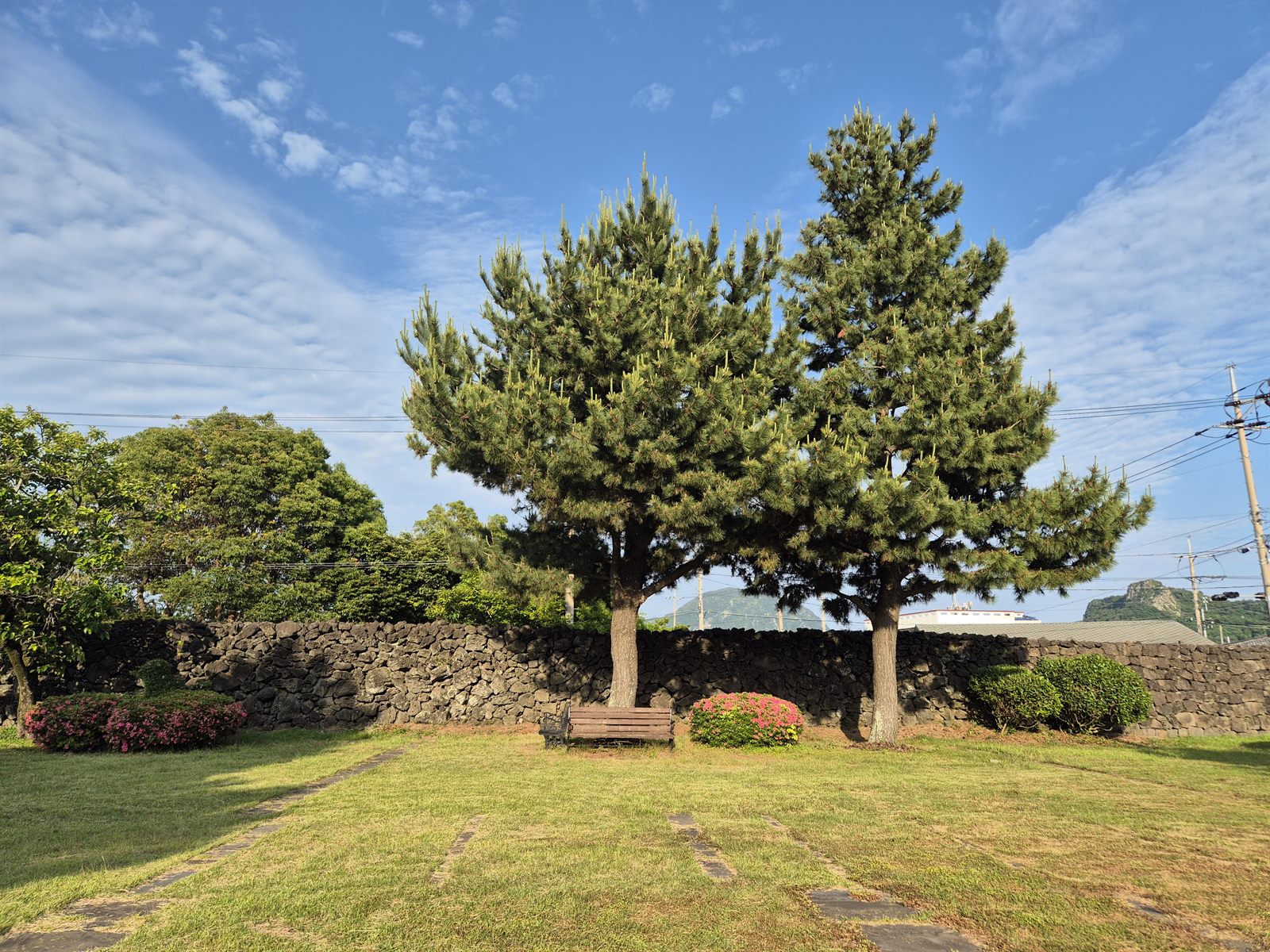
Two pine trees standing guard over the yard
The thatched house standing here now is not the original. It was rebuilt from the accounts of descendants and villagers, on the site of the Kang Do-sun house where Kim actually stayed. A stone wall, a narrow yard, a few low thatched roofs — that is all of it.
In front of those pines I wondered for a moment whether they were trying to say, "Chusa was framed." It's quiet, the way an exile site should be, and there's an air of so this is the place.
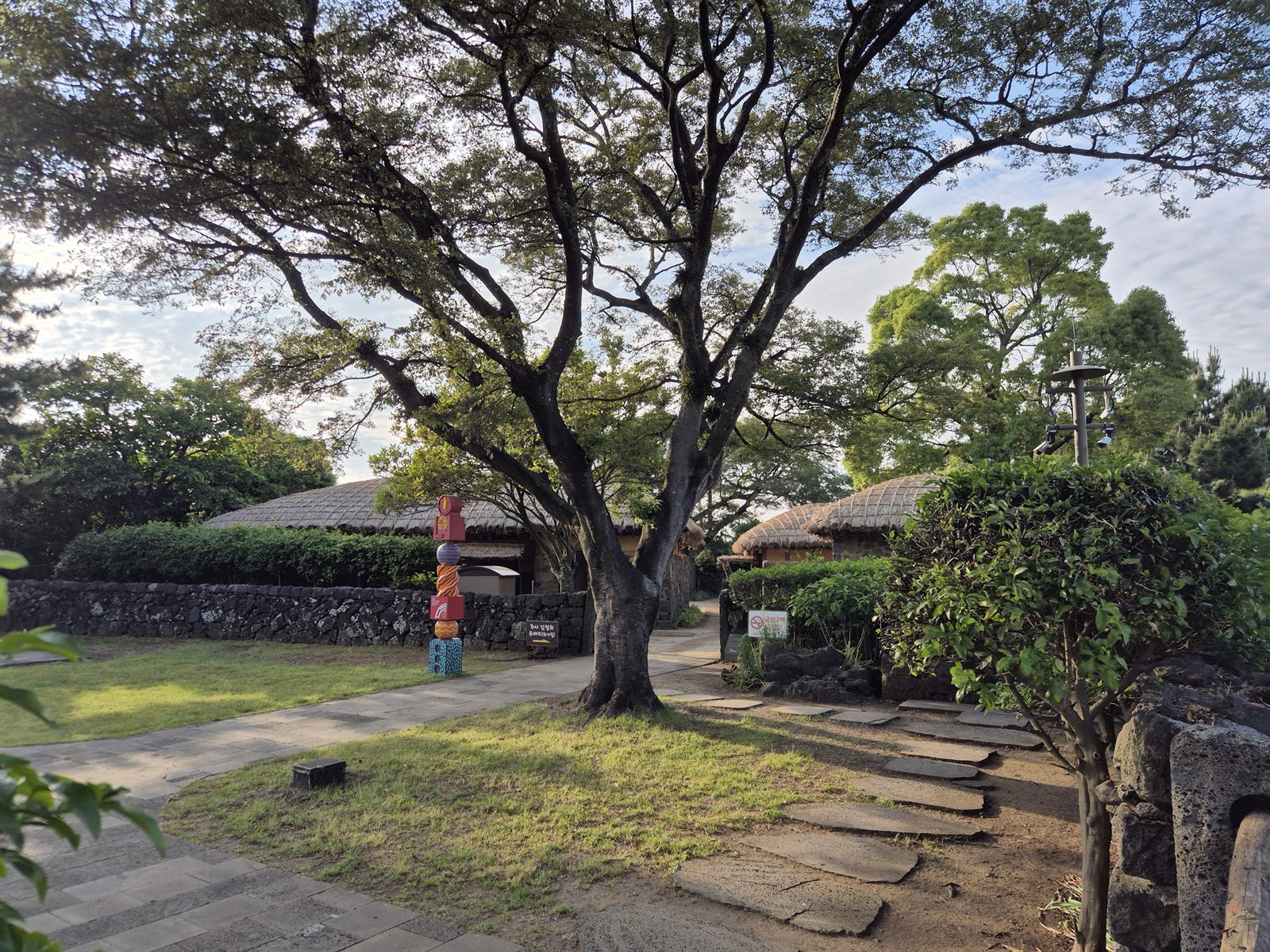
What it looks like
Two tall pine trees stand side by side in the middle of the lawn yard, with a low black basalt wall running around behind them. A wooden bench sits in front of the wall between the pines, flanked on both sides by rounded azalea shrubs in pink bloom. Flat stones are laid at intervals across the grass to form a path. Beyond the wall, mountain peaks show in the distance, and thin clouds spread long across the sky. The sunlight comes in at a slant and makes the grass glint yellow.
Kim Jeong-hui and this spot
If you're passing through the southwest of Jeju, around Daejeong, this is worth a short stop. Whether you're heading straight down to Moseulpo Harbour or coming over from Aewol toward Seogwipo, it's barely a detour.
This is where Kim Jeong-hui — the "Chusa" of Chusa-che, the calligraphic style — lived out his exile. In 1840, caught up in a political purge, Kim Jeong-hui (1786–1856) was banished here to Daejeong. He wasn't released until 1848 — more than eight years. The sentence was called wiri-anchi: the house is ringed with a hedge of thorns, and you do not leave it.
His writing, they say, only grew firmer in that confinement. The hand we now call Chusa-che matured around this time, and the painting he gave his student — the Sehando (1844) — came out of these years too. It shows a pine and a Korean pine (jat-namu) that stay green through the cold season.
The Jeju Chusa Museum
Next to the house is the Jeju Chusa Museum. It is a low building, mostly underground, gathering the story of the Sehando along with letters and calligraphy. It is small; even at a slow pace it does not take long.
For foreign visitors
- This is a place you come for the story, not the scenery. Kim Jeong-hui was a 19th-century scholar and calligrapher of Joseon Korea — a very large name in Korean calligraphy.
- He was held here as a political prisoner for over eight years, and in that time he painted his best-known work, the Sehando.
- What there is to see: a few reconstructed thatched houses, a stone wall, a small underground gallery. Thirty minutes to an hour is plenty.
- Exhibit captions are mostly in Korean. The paintings and calligraphy speak without words.
- Moseulpo Harbour, Sanbangsan and Daejeong Hyanggyo are all close by, so it bundles well.
Who this suits
- ✅ You're touring west Jeju by car and want a short stop
- ✅ You have an interest in Korean history, calligraphy or art
- ✅ You prefer a quiet spot to a crowded landmark
- ⚠️ You're expecting a grand sight or a large garden — this is small and plain
- ⚠️ You're relying on public transport — you can get here, but buses are infrequent
Before you go
- Getting there — 44 Chusa-ro, Daejeong-eup, Seogwipo, Jeju. Under 10 minutes by car from Moseulpo Harbour, near Daejeong Hyanggyo.
- Admission · hours · closing day — Free, open 9:00 AM–6:00 PM (last entry 5:30 PM), closed every Monday (also 1/1, Lunar New Year, Chuseok). (as of Aug 2026) — worth confirming again before you go.
- Bundling — Moseulpo Harbour → Sanbangsan → Chusa's place of exile makes a natural loop.
- Eat — down toward the harbour, Jeju Halmang Bapsang Moseulpo is worth it for a grilled-fish spread.
Was this useful?
No sign-in needed. Tap again to undo.
Around here
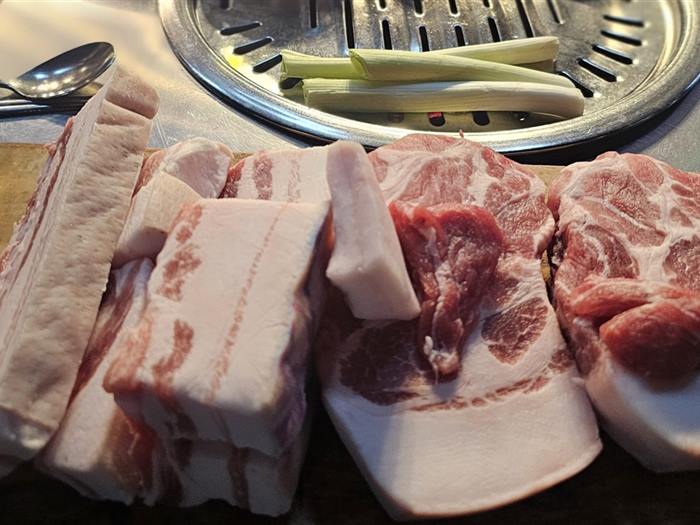
Keundonga Seojjok Daepyo Main BranchJeju Pork Belly and Neck Meat, Grilled for You Near Hyeongjeseom Island
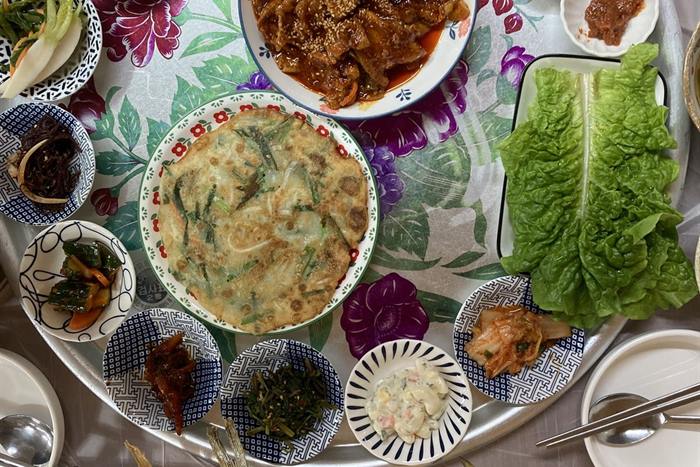
Jeju Halmang Bapsang MoseulpoGrilled Fish and Ten Side Dishes for 15,000 Won
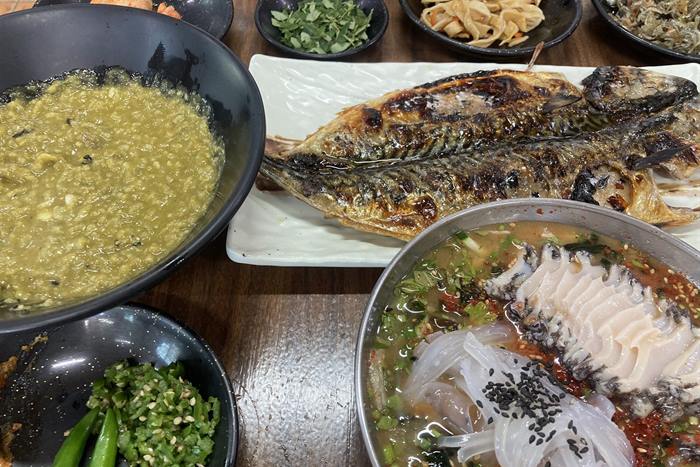
Gongcheonpo SikdangThe Best Abalone Porridge I Have Found, and Not Expensive