GyeongjuKorea's Kyoto, With Bulguksa by Day and Cheomseongdae by Night
## The Kyoto comparison, and why it holds
If you know Japan, the fastest way to understand Gyeongju is this: it is Korea's Kyoto.
Gyeongju was the capital of the Silla kingdom for nearly a thousand years, and not just briefly. So the whole city is the site.
You don't walk to a preserved district and then leave it. You walk through town and burial mounds, temple grounds and stone pagodas keep appearing. That is exactly the Kyoto feeling.
Practical consequence: one day is not enough, and the sites are spread out — you cannot walk between all of them.
Bulguksa — for the daytime
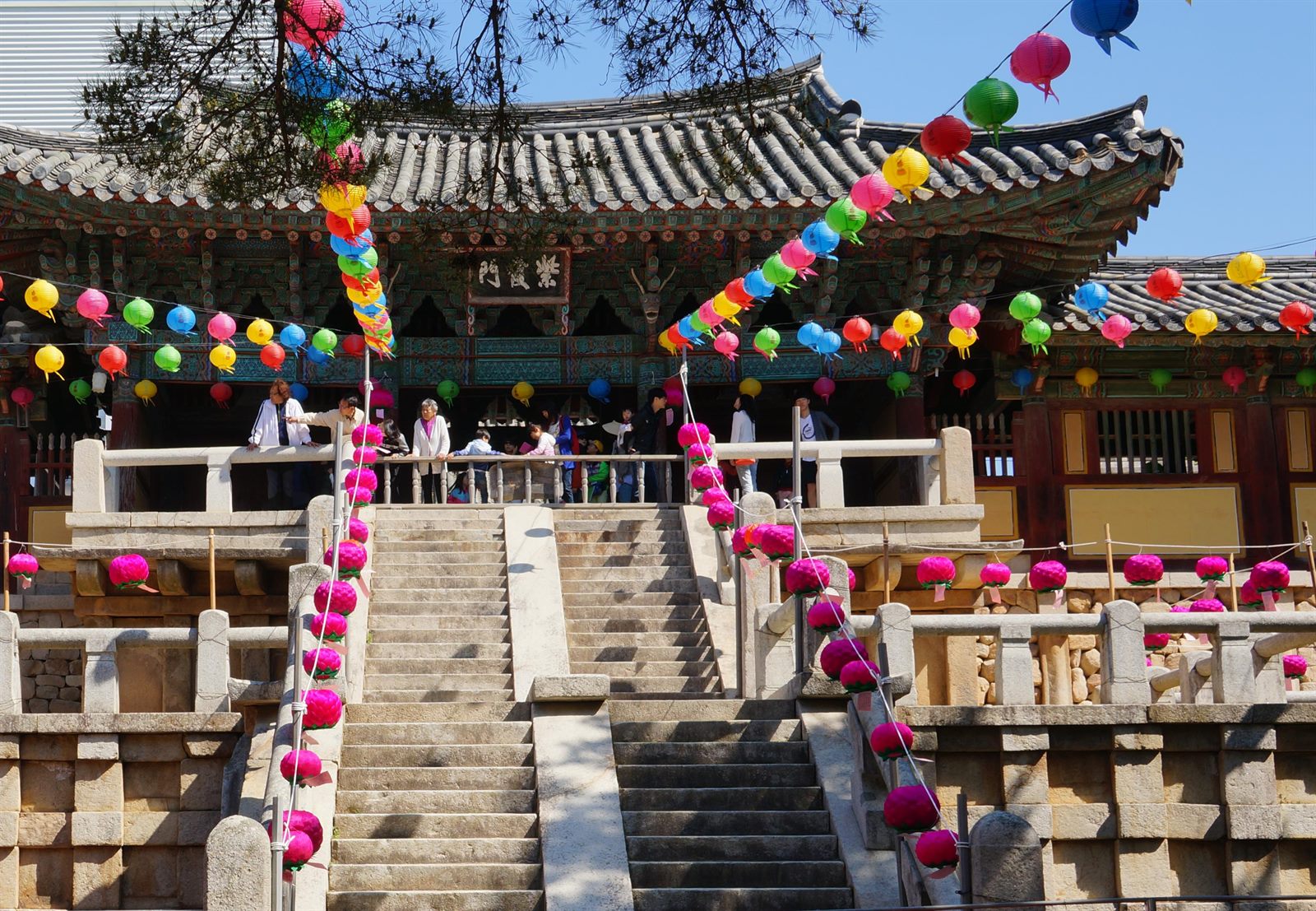
A Buddhist temple completed in 774 AD, UNESCO World Heritage.
What strikes you in person isn't grandeur. It's how human-scaled it is. The stone terraces, the staircases, the gate sitting on top of them — none of it is built to overwhelm you.
It is famous for two stone pagodas standing in the same courtyard, and they are deliberate opposites:
- Dabotap — elaborate, ornate, structurally complex
- Seokgatap — severely plain, almost bare
Putting those two side by side is the whole idea. Don't look at one and walk past the other — the contrast is the point.
Opens at 9:00 AM. Early is quieter.
Cheomseongdae — for after dark
This is the part worth planning around.
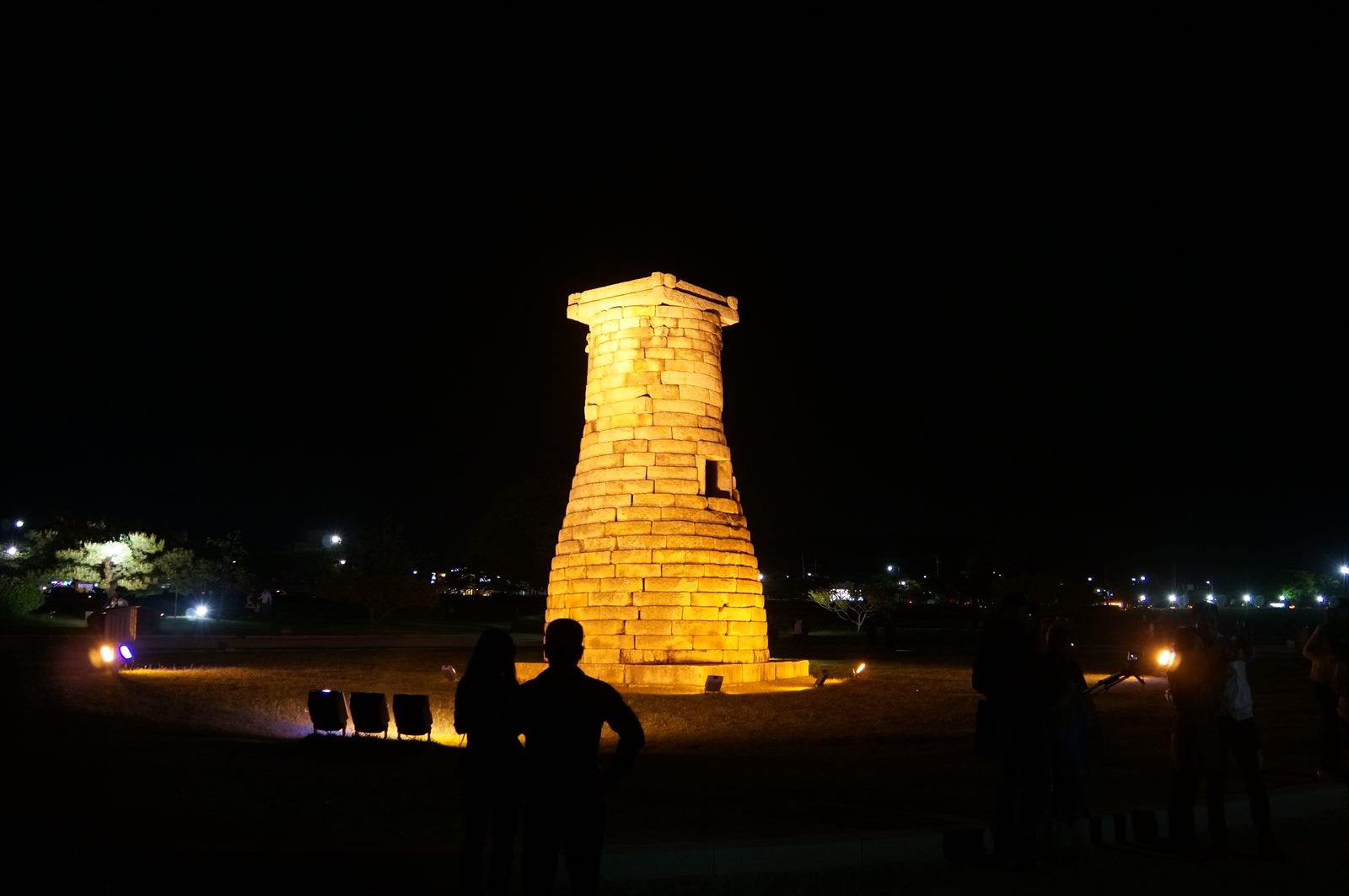
By day, Cheomseongdae is a modest stone tower in a field. Then the sun goes down, the lights come up, and it announces itself. Everything around it is dark grass; only this is lit. It becomes a different object entirely.
The night view is the biggest draw at Cheomseongdae.
It's open until 10:00 PM. Build your evening around it.
The tower is built from 362 stones, a number said to represent the days of the solar year, and it is the oldest surviving astronomical observatory in East Asia — 7th century.
What it looks like — Cheomseongdae at night
Under a black night sky, Cheomseongdae glows gold in its lighting. The body, built of stacked stones, narrows as it rises, with a single square opening in the middle section. A square stone frame sits at the top. Silhouettes of people stand in front of the tower, and the lights of the town scatter in the distance. On the grass around it, floor-level lamps shine up at the tower.
Split the city into day and night
This is the way to use Gyeongju properly.
- Day — places with gates and opening hours, like Bulguksa
- Night — places that are lit and open late: Cheomseongdae, Donggung and Wolji pond (Anapji), and the Daereungwon burial mounds
Anapji and Daereungwon are the natural stops alongside Cheomseongdae. Those three form a walkable night circuit.
Getting there, and the food
KTX runs to Singyeongju Station, so reaching Gyeongju from Seoul is straightforward.
The harder part is after you arrive. The sites are scattered and public transport isn't dense. City buses work but eat a lot of time.
- A car is easiest
- Without one, taxis or a day tour are the realistic options.
Gyeongju is also known for galbi — grilled beef short ribs. It would be a waste to come only for the ruins. I haven't eaten widely enough here to recommend a specific restaurant honestly, so I'm not going to name one. When I go back I'll write it up separately. If you're chasing seafood elsewhere in Gyeongsang, I've also written up Yongwon Hoetjip in Jinhae for its fresh cod soup — it's a separate trip from here, not a day-trip pairing.
Who this suits
- ✅ You came to Korea for history, not only cities and food
- ✅ You liked Kyoto and want the Korean equivalent
- ✅ You want somewhere that's still worth walking after dark
- ⚠️ One day is not enough
- ⚠️ Awkward to cover on public transport alone
Was this useful?
No sign-in needed. Tap again to undo.
Around here
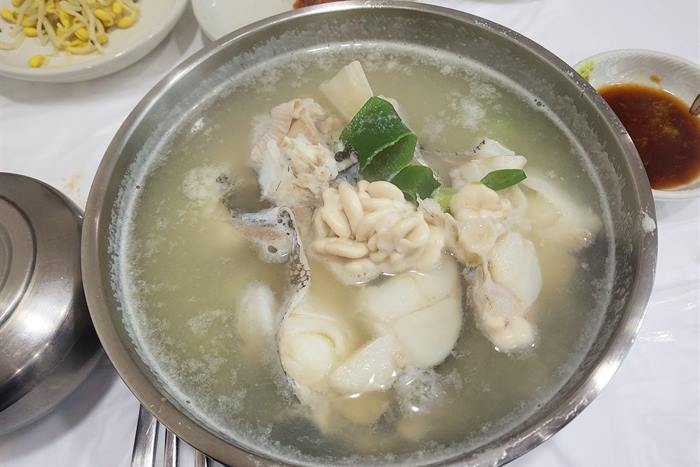
Yongwon HoetjipFresh Cod Soup in Jinhae, and the Milt Steals the Show
Walking Geoje IslandThe Road Between the Famous Places Was the Better Part
Hamdeok BeachEmerald Water, and a Spot on My Someday Month-Long-Stay List in Northeast Jeju